
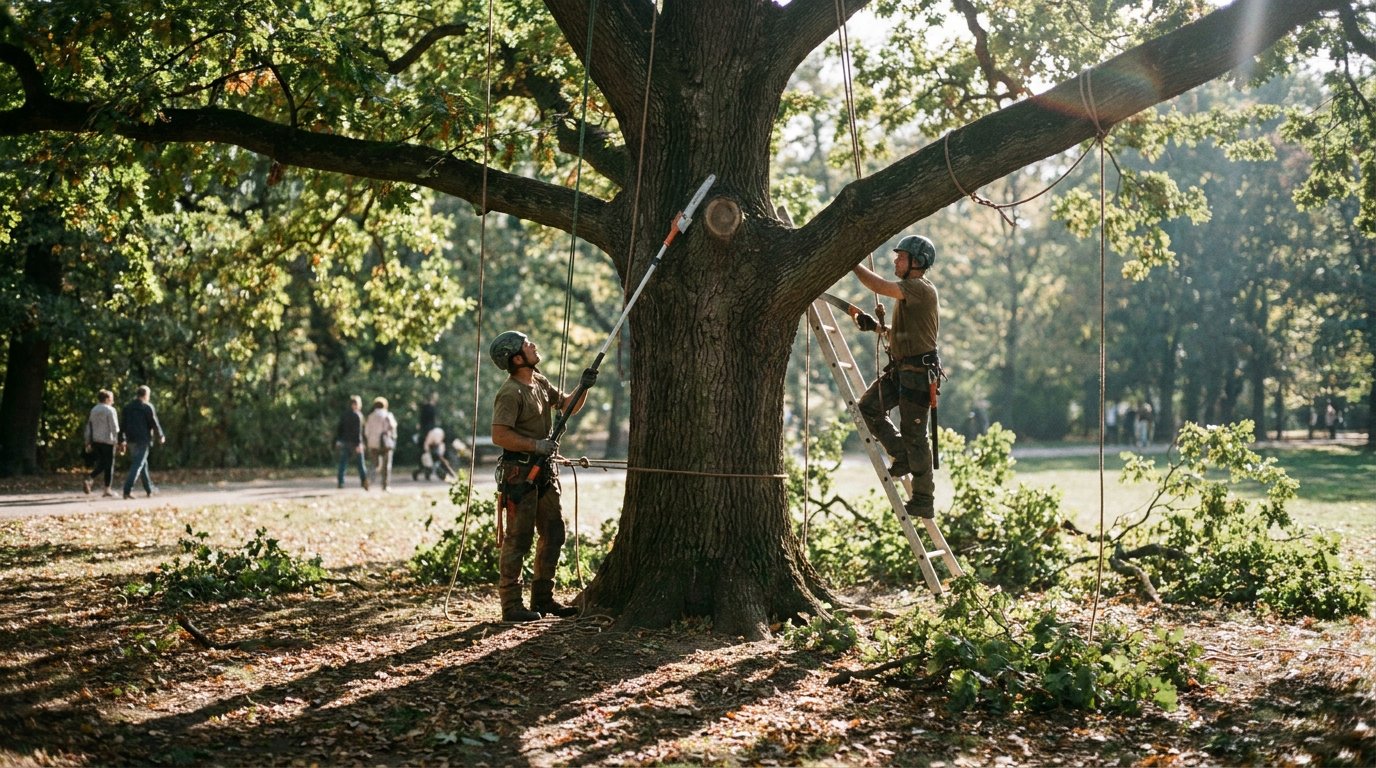
Proper Pruning Techniques for Healthy Shade Trees
Tree Care Tips
Why Proper Pruning Matters for Your Shade Trees
Proper pruning is essential for maintaining the health, safety, and beauty of your shade trees. When done correctly, pruning encourages strong growth, improves tree structure, reduces disease risk, and enhances the overall appearance of your landscape. Unlike simple trimming, proper pruning involves strategic cuts made with an understanding of tree biology and growth patterns. Trees that receive appropriate pruning live longer, require less maintenance, and add significantly more value to your property than neglected specimens.
Understanding Tree Biology and Growth Patterns
Before making any cuts, it’s crucial to understand how trees respond to pruning. Trees compartmentalize wounds rather than healing them like humans do. Each cut creates a permanent entry point that the tree must seal off to prevent decay organisms from entering. The tree’s response depends on where and how you make the cut. Trees grow in predictable patterns, with dominant leaders, lateral branches, and specific growth habits that vary by species. Understanding these patterns helps you make cuts that work with the tree’s natural defense systems rather than against them.
How Trees Respond to Pruning Wounds
When a branch is properly pruned, the tree forms protective barriers around the wound to prevent the spread of decay. These barriers consist of chemically fortified wood that inhibits the movement of microorganisms into the trunk. The effectiveness of this process depends heavily on the location of the cut. If you cut too far from the branch collar, the tree cannot properly compartmentalize the wound, leaving it vulnerable to pests and diseases.
Seasonal Considerations for Pruning
Most shade trees respond best to pruning during their dormant season, typically late fall through winter. During dormancy, trees have stored energy reserves that help them recover from pruning stress. Additionally, the absence of leaves makes it easier to assess branch structure and identify problem areas. Some species, like maples and birches, may “bleed” sap if pruned in late winter or early spring, but this is generally harmless. Avoid heavy pruning during spring leaf-out or fall leaf-drop when trees are allocating energy to these processes.
Essential Pruning Tools and Safety Equipment
Using the right tools makes pruning easier and helps create clean cuts that trees can properly compartmentalize. For most residential shade trees, you’ll need three primary tools: hand pruners for small branches up to ¾ inch, loppers for branches up to 1½ inches, and a pruning saw for larger limbs. Always ensure your tools are sharp and clean—disinfect blades with isopropyl alcohol between trees to prevent disease transmission. For safety, wear protective glasses, gloves, and sturdy footwear. When working above shoulder height or using saws, consider additional protection including helmets and hearing protection.
Tool Maintenance and Selection
Quality tools maintained properly will last for years and make cleaner cuts. Bypass pruners (which cut like scissors) are preferable to anvil-type pruners for live branches because they create cleaner cuts without crushing tissue. For larger trees, pole pruners and saws can help reach higher branches safely. Never use chainsaws for pruning unless you have proper training and safety equipment—they’re designed for removal, not precision cutting.
Key Pruning Techniques for Shade Trees
Different situations call for specific pruning techniques. The three most important cuts to master are the thinning cut, reduction cut, and heading cut. Thinning removes entire branches back to their point of origin, opening the canopy without stimulating excessive new growth. Reduction cuts shorten branches back to lateral branches large enough to assume the terminal role. Heading cuts remove the end of a branch back to a bud and should be used sparingly as they often stimulate unwanted sprouting.
The Proper Three-Step Cut for Larger Limbs
For branches larger than 1½ inches in diameter, use the three-step method to prevent bark tearing. First, make an undercut about 12-18 inches from the trunk, cutting upward about one-third through the branch. Second, make a top cut 2-3 inches further out from the first cut, cutting downward until the branch falls. Finally, make a clean final cut just outside the branch collar—the slightly swollen area where the branch meets the trunk—angling it slightly away from the trunk to allow water runoff.
Identifying the Branch Collar and Branch Bark Ridge
The branch collar is the swollen area where the branch joins the trunk or parent branch. The branch bark ridge is the raised bark that forms in the branch union. These natural features indicate where the tree’s defense systems are strongest. Your final cut should preserve both—cutting just outside the branch collar without cutting into the branch bark ridge. Never flush cut (cutting parallel to the trunk) as this removes the branch collar and creates a large wound the tree cannot properly compartmentalize.
Common Pruning Objectives and Approaches
Pruning serves different purposes depending on your tree’s age, species, and location. Young trees often benefit from structural pruning to establish strong form, while mature trees may need maintenance pruning to remove deadwood or reduce risk. Always have a clear objective before making any cuts—random removal of branches can do more harm than good.
Structural Pruning for Young Trees
For trees less than 10-15 years old, focus on developing a strong structure. Identify and maintain a central leader (main trunk) while selecting well-spaced lateral branches that form strong angles with the trunk. Remove competing leaders, crossed branches, and those with narrow crotch angles (less than 45 degrees) that are prone to failure. Proper early training can prevent major problems decades later.
Maintenance Pruning for Mature Trees
Mature trees typically need pruning to remove dead, diseased, or damaged limbs; eliminate safety hazards; and thin the canopy to reduce wind resistance. Always prioritize removing problem branches before considering aesthetic changes. Never remove more than 25% of a mature tree’s canopy in a single year—excessive removal can stress the tree and stimulate undesirable watersprout growth.
Raising and Thinning the Canopy
Canopy raising involves removing lower branches to provide clearance for buildings, vehicles, or pedestrians. Remove these branches gradually over several years rather than all at once. Canopy thinning selectively removes branches throughout the crown to improve light penetration and air movement. Proper thinning follows the tree’s natural branching pattern and removes no more than 15-20% of live foliage from any part of the crown.
What Not to Do: Common Pruning Mistakes
Many well-intentioned homeowners make pruning errors that can seriously harm their trees. Avoid these common mistakes to keep your shade trees healthy and attractive.
- Topping: Drastically cutting back main branches to stubs is extremely harmful. Topping creates large wounds, stimulates weak growth, and significantly shortens tree lifespan.
- Over-pruning: Removing too much foliage at once stresses the tree by reducing its ability to photosynthesize. Never remove more than 25% of total foliage in a single season.
- Flush cutting: Cutting branches flush with the trunk removes the branch collar and creates wounds that cannot compartmentalize properly.
- Using wound paint: Research shows that pruning sealants and paints can trap moisture and promote decay rather than preventing it.
- Pruning at wrong time: While most trees can be pruned year-round, some species have specific times when pruning should be avoided.
When to Call a Professional Arborist
While many pruning tasks can be handled by knowledgeable homeowners, some situations require professional expertise. Consider calling a certified arborist if your trees need work near power lines, require climbing or aerial lifts, have significant disease or structural issues, or if branches are larger than 4-5 inches in diameter. Professionals like those at Mike Herronen’s Tree Service have the training, equipment, and experience to handle complex pruning situations safely and effectively.
Recognizing Complex Pruning Situations
Some pruning scenarios present unique challenges that are best left to professionals. These include trees with codominant stems (two main trunks), included bark (where bark becomes trapped between branches), significant decay, or previous improper pruning. Trees that have sustained storm damage or show signs of disease often require specialized assessment and treatment approaches that go beyond basic pruning knowledge.
Aftercare and Monitoring
Proper aftercare helps trees recover from pruning stress. Water trees deeply during dry periods following pruning, but avoid fertilizing immediately as this can stimulate growth when the tree should be focusing on wound compartmentalization. Monitor pruning cuts over time for signs of improper healing, such as discoloration, oozing sap, or fungal growth. Most properly made cuts will callus over within one to two growing seasons.
Long-Term Pruning Planning
Develop a long-term pruning plan rather than approaching it as a one-time task. Most shade trees benefit from light pruning every 3-5 years once established. Keep records of when and how your trees were pruned to maintain a consistent approach over time. Regular light pruning is always preferable to occasional heavy pruning, which creates larger wounds and greater stress.
Proper pruning is both an art and a science that requires understanding tree biology, using correct techniques, and knowing when to seek professional help. When done correctly, it enhances the health, safety, and beauty of your shade trees for decades to come. For complex pruning needs or if you’re unsure about proper techniques, consider consulting with local experts like Mike Herronen’s Tree Service who understand the specific needs of trees in our region.